Saturday, April 7, 2007

I'm going to Kenya

I'm very fortunate to have been invited as a photographer on a trip to Kenya with the International Humanity Foundation, a true non-profit group who has been helping a tribe of people in Kenya called the Pokot (just one of many of their projects). I won't summarize here everything they've done and are doing; for that you can visit their website. However suffice it to say the generous work of everyone involved with IHF, from the founder Carol Sasaki to the volunteers who answer their phones, are greatly appreciated by the Pokot people and others around the world. I've been invited to document the culture of the Pokot people and the work of the IHF. My photographs will be used as preservation of their culture and heritage, as well as used by the IHF for fundraising for current and future projects.

I nearly went on this trip in January, but other obligations got in the way and I couldn't do it. Fortunately the opportunity came up again, and I leave on April 22, returning May 6. It's quite the journey out there; I fly from San Jose, CA to Chicago to Brussels to Nairobi, where I'll be met and driven to the final destination. The nearest city is Nakuru, and the location of the Pokot orphanage is approximately 0°50'16.00"N 36°1'14.00"E (the link will open Google maps). My return flight is Nairobi to London to Los Angeles to San Jose. I hope to visit friends on the 5 hour layover in London.

This is a massively important project for me; since my return to photography I've dreamed of doing a project like this, and certainly didn't expect this to come along so soon. I'm scrambling to prepare for it, while of course maintaining my current work commitments. Those who know me and know my day job know that I'm extremely busy right now leading up to NAB, the big broadcast show in Las Vegas. I leave for that show in less than a week, and return two days before leaving for Kenya. So I'm trying to get everything together now.

I'm going to blog about this trip, every step of the way, including preparation. Internet coverage is essentially nonexistent where I'll be (they don't even have electricity, so I guess asking for a broadband connection is a bit much!). I could of course connect via satphone but what I'm doing isn't urgent enough to require the expense, so all my writing and blogging will happen offline and get posted when I can.

Since I'm currently two weeks out, I'll talk about some of the prep going into this. Of course I'm throwing every bit of technology I can at this, because, well, it's me ;-)

** TRAVEL **

I booked on American Airlines with expectations of using my miles to upgrade to business class, at least for the return flight. But of course there were no upgrade seats left, and... get this... American now charges a $300 co-pay each direction for a points upgrade! So, it's economy all the way. SJC-ORD-BRU-NBO, then home NBO-LHR-LAX-SJC. Thanks to seatguru I should have power points at each seat.

** SOLAR POWER **

For power, there is a solar supply out there and I'm also bringing a little one called, originally, the Portable Solar Power System from the informative and helpful folks at http://www.siliconsolar.com/ which will primarily be for charging camera batteries. I'll be relying on their power to charge the laptop.

** CAMERA GEAR **

My primary purpose in going is of course photography, so I'm bringing all the toys. I'll be carrying one each of a 5D, 20D and 30D bodies. My lenses include a 14mm Aspherical, 24-70mm f/2.8, 85mm f/1.2, 100mm macro, 70-200mm f/4, and a 400mm f/4. I'm hoping to do some kind of safari while there, but am not sure if that will or won't happen. I'll carry a Gitzo tripod with Manfrotto tracker joystick head, and my Gorillapod, and loads of little goodies to go with.

In case I can't get my laptops charged, I'm brining an Epson P-5000 photo storage viewer to store digital photos on.

** COMPUTERS **

My primary computer is a MacBook Pro Core 2 Duo 17", with a 15" Core Duo as backup. The 17" will be in a custom built case (which I'm still working on) inspired by this Chase Jarvis blog entry. I'll post pics or video of it when it's done. All photo management will be done in Aperture (more on that below).

** GEOTAGGING **

One thing I really wanted to do on this trip was geotag my photos. All the pieces have come together for this trip (or are about to!) and I think this will really work. The workflow is a bit convoluted and tedious, but I think worth it in the end. So here's how that works...

I have a Sony GPSCS1KA which logs GPS position every 15 seconds. Plug this into the Mac and you can copy off the GPS .log file. Then using LoadMyTracks, convert the .log to a .GPX file. Now the GPS data is ready to be merged with the photos. (Apparently this can be automated with a perl scrip in an Automator action, according to this website. I haven't tried it yet but definitely will)

Whenever I'm ready to capture photos of the CF cards, instead of capturing straight to Aperture I'll first copy the files to the Finder. Then I'll add GPS data to the pictures using the HoudahGeo software. Basically it looks at the timestamp on the photo, looks for the closest time stamp from the GPS log file, and adds the appropriate coordinates to the image file.

Then I import the geotagged images into Aperture, and proceed as normal. When I'm ready to put pictures on the web, I'll use the Connected Flow's flickr plug-in to upload to my flickr account (click here for a map test from Hawaii; these aren't properly geotagged, but the approximate data was added later). This plug-in passes through the GPS data, and then flickr automatically places them on a map.

Cool, huh?

** MISC **

I'm bringing a Kata rain cover for one camera. I have it in my head that I'll set up the camera for some long term (i.e. all day) auto-triggered exposures, perhaps to catch animals at a watering hole, or a full-days excitement at the village. Should be fun.

** MOSQUITOS **

I'm already taking Neem tablets and have 34% Deet bug repellant, and a mosquito net to sleep in. Wish me luck.

** WEATHER **

It's been hard to get a picture of what to really expect. Currently it's only 85º in Nakuru, but I'm told it gets a lot hotter the 80 miles away in the Pokot village. We'll be in the Rift valley. I don't know about humidity, but I do know it's dusty and dirty. Should be fun.

** HYGIENE **

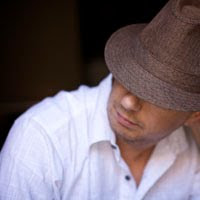
Those that know me will find this part shocking - I'll be shaving my head right before I go. Probably a tad unnecessary, but it's for the heat, to make it easier to keep clean(er), and frankly because it's a great excuse to do it. Don't worry, there will be pictures (and yes mom, I'll wear a hat and plenty of sunblock!)


OK that's a good start to all this. Again I'll do video and text blogs, but not much will be posted in real-time.

Thursday, March 22, 2007

Bill Lonero Band

Last night a friend of mine, Frank Casanova, was playing with Bill Lonero's band in downtown San Jose at the Voodoo lounge. I shot a few for them. See a little gallery here.

Monday, January 15, 2007

An impressive use of Aperture and AppleScript

I recently worked on a project where I was asked to design an Aperture workflow for a live shoot. It worked out really well, so I wanted to share it here.

SETUP: studio shoot; two simultaneous setups, cameras, photographers, etc. Two days, 11+ hours each, 150+ setups, thousands of photos.

OBJECTIVE: to photo-edit in near real-time… rating, tagging and keywording (aka "tag and bag"); cropping and white balancing; color or other image adjusting as needed. Provide twice-daily web previews for remote client.

TECH: two Canon 1Ds Mark II's and an assortment of lenses and lights, two PowerMac G5's and 23" displays, one Mac Pro Intel Quad with dual 30" displays, internal 1.5TB RAID, fast network, G-Tech G-RAID for backup. All pictures shot RAW.

THE GOODS: All made possible with the power of AppleScript, Aperture, and the Mac.

First step was setting up a tethered shooting solution for the two cameras. Each Canon was USB tethered to a PowerMac G5. Canon's EOS Utility was used to copy the images from the camera to the computer in real-time. The software was set to leave a copy of the image on the CF card as well as copy it to the computer, so an instant after the shutter was depressed, there were two copies of the image - one on the CF card and one in the watched destination folder on the Mac.

The destination folder on each Mac was being watched by Aperture Hot Folder. As each image was captured, it was immediately added to the Aperture library. The current version of Aperture Hot Folder allows Aperture to operate in full-screen mode, and still capture in the background… then automatically advance to the just-imported frame. While in full-screen, the photographers opted to have the HUD (Heads Up Display) open with the RGB histogram displayed, and the loupe loaded. This mean that seconds after each shot was taken, they could watch the screen for their image, check levels on the histo, and check sharpness in the loupe.

The destination folder on each Mac was actually being watched by a second script as well. This script simply copied each image across the network to the Mac Pro, where they landed in one of two folders; Camera1 or Camera2. At this point, again only seconds after the shutter was depressed, three copies of the image existed.

Meanwhile on the Mac Pro, where I sat, I had Camera1 and Camera2 folders opened in icon view, with previews on and the icons set to the largest size. This allowed me (and the producers watching over my shoulder) to monitor the progress of each camera simultaneously. Any image in question could be quickly opened in Preview for a fast check.

As soon as either camera was finished with a particular setup, they would notify me that the setup was complete so I could import the batch into Aperture. At that point I simply clicked on either my Camera1_import or Camera2_import AppleScripts.

Each AppleScript would import the appropriate folder of content into Aperture, then move the images from the Camera1 or Camera2 folder into a Camera1_ or 2_archive folder, as appropriate. These archive folders would later be backed up for a fourth and final copy of each image. Also, since Aperture maintains its links to its referenced images so well, even though the images had already been imported (by reference) into Aperture, they could still be moved to another folder on the drive and Aperture never lost track of a link.

Additionally, the scripts did more than simply import the images. They also applied a series of metadata strings, including copyright data and a camera identifier. This allowed the images to be sorted by camera later on if needed.

Once each batch was imported, in Aperture I would use the Find command to isolate the most recent import session, therefore only looking at the most recent batch of photos. From there I would manually stack the pictures (an easy task to do manually with the studio setup, and not particularly suited to auto-stacking since time between shots varied so much). Once stacked I would select large groups of images and batch-apply keywords as needed. We had a series of about a dozen keywords across four categories; each image required one or more keyword from each category to be properly identified later.

(I also set up smart albums to call out any images that had not yet been keyworded, meaning they were missed in the initial keyword run. This proved useful as occasionally images would get missed, and this process allowed those to be quickly identified and corrected.)

Once stacked, I would select the reference color-chart image (one was shot for each studio setup), define a white balance point, and lift-and-stamp that white balance across all other images from the shoot. In a matter of seconds, Aperture could white balance hundreds of photos to the exact same specification.

At this point, I went to full-screen mode to compare stacked images and pick a best shot. For some stacks, it was as easy as picking the last or second-to-last photo. For others, Aperture's Stack Mode was used extensively, comparing a current pick to the next shot in succession. And finally in yet others, all images in the stack were thrown across dual 30" displays and individually duck-hunted out of the stack selection until it was narrowed down to a final pick. The process used really depended on the individual content and quantity of each stack. The seamless flow between all picking methods in Aperture meant we were able to comb through hundreds, and ultimately thousands of photos in record time.

Once the images were tagged and bagged, some images required cropping or other image adjustments, and so were treated quickly and effectively.

On a final pass through the current selection, favorites would be tagged with a 3-star rating. This would come in handy later.

Meanwhile, the next shoot for either camera setup would continue unabated. The instant we were notified of a setup completion, images would be imported via the two AppleScripts, regardless if ready for them or not in Aperture. As soon as one set was completely photo-edited, I would move on to the next set.

Earlier on, several smart web-gallery were set up to isolate particular keyword criteria and 3-star matches. This meant that publishing updates to the website was only one-click away, as each smart web gallery was auto-created with all the favorite choices.

Finally, twice a day (at lunch and at end-of-day), a Backup routine would be run, copying the master image files and Aperture Library to the G-RAID, providing a fourth and final version of each photo. At this point the original images on the CF-cards would be deleted.

And that is how we shot thousands of pictures in two days… and picked out the best before we went home.

Friday, December 1, 2006

Nangpa La Pass International Day of Action

Yesterday I volunteered to photograph the International Day of Action at the Chinese Consulate in San Francisco for various organizations as they protested the killing and detaining of Tibetans following the Nanpa La pass incident.

I have posted a selects gallery and a complete gallery for the organizations to use. I've also posted my favorites on www.josephlinaschke.com

For more information on the incident, please visit http://www.sftyc.org/nangpa

Thursday, November 30, 2006

Gorillapod

Gorillapod at work! Supporting a Canon 5D and 70-200 mm lens while shooting 15-30 second exposures of the San Francisco skyline at night.

Monday, October 2, 2006

A Month in Europe

I spent basically all of September '06 in Europe. Starting in Amsterdam for IBC, and ending in Cologne for Photokina, with a bit of Berlin and Munich in the middle.

Business is business, but who says you can't have a little fun along the way.

The unique site is here

Thursday, July 27, 2006

RAAM (Race Across America)

I was invited to join the all diabetic race team, Team Type 1, on the (bicycle!) Race Across America. One of my best friends in the world was on the team, Steve Holmes, so of course I couldn't say no.

It was one of the most intense, grueling, and fun shooting events of my life, and one that has proved to have kicked my ass back into photography.

I blogged the entire trip extensively (70-something entries if I recall), had over 20,000 hits to the website, and shot thousands of pictures. If you have any interest in bicycle racing, the dedication of diabetics, or just plain ol' cross-country adventures, I encourage you to open a bottle of wine and come along for the ride. It's a good, long read, and a lot of fun.

This is the blog


This is the photo gallery

Saturday, April 1, 2006

Great Grandfather Linaschke

In March '06, my cousin Michael and I set out Florida to document the history of the patriarch of our family, Great Grandfather Linaschke. The project was all about video – 12 hours of it – but I shot some stills as well

Here is the unique site

Monday, March 27, 2006

PIE Show, Tokyo

Tokyo is always entertaining, and this trip was no exception. The show was PIE, or Photo Imagine Expo. Big, loud, and very Japanese. What else is there to say?

I just had to build a unique site for this trip.

Thursday, December 1, 2005

Italy; two weeks in five days

I was in Italy for a week for a work shoot. We hit Positano, Rome, Florence and Venice. I shot quite a bit at night, which started my whole night-time architecture kick. There are two galleries…

Daytime gallery and Nighttime gallery